
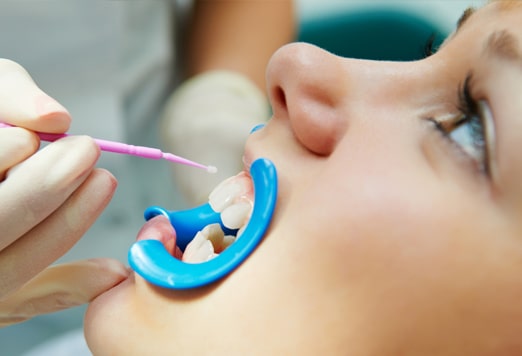
Fluoridation (and remineralization) is the application of special solutions rich in fluoride ions to the surface of the teeth. Fluoridation of children’s teeth is an important preventive measure that prevents the development of caries. The procedure is simple and completely painless, so it not only protects the child’s teeth, but also shows that a visit to the dentist is not scary and not painful.
Fluorine ions prevent the impact of the acidic environment in the child’s mouth, thereby preventing the reproduction of bacteria that cause caries.
It is important to realize that fluoridation, along with professional teeth cleaning, is a measure of caries prevention, but not its treatment. That is, regular fluoridation will prevent the appearance of caries, but when it appears, it is necessary to treat caries first, and only then carry out fluoridation.
It is usually recommended to carry out the fluoridation procedure from the age of 1.5 – 2 years, with regularity from two to five times a year (the children’s dentist will tell you exactly after the examination). This allows you to protect against:
It is very important to fluoridate the teeth during the period of their eruption or change. A recently erupted tooth, both primary and primary, is covered with enamel that is deficient in fluoride and other active materials. It is at this time that the tooth is especially vulnerable to caries.
Also, fluoridation is necessary in adolescence, when, due to the active growth of the body and hormonal changes, the viscosity of saliva increases, which has a detrimental effect on tooth enamel. In addition, fluoridation must be carried out when installing bracket systems.
The lack of fluorine and minerals is covered by remineralization, better known as fluoridation.
There are 2 main methods of fluoridation of teeth:
Simple fluoridation is carried out for the purpose of prevention, to protect healthy teeth from damage. During the procedure, a thin layer of varnish containing fluorine is applied to them, which covers the enamel and creates a barrier film. At the same time, it does not affect the deep layers of the tooth.
To obtain the maximum effect from simple fluoridation, 3 to 5 procedures are required, which are carried out once every 6 months.
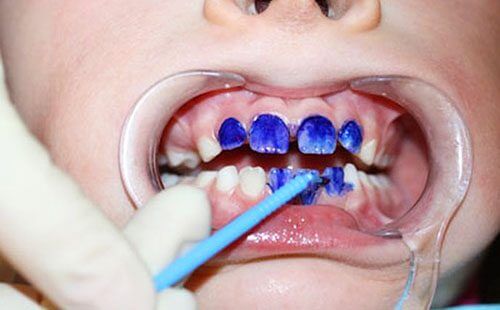
Deep fluoridation is used on teeth with damaged enamel, as well as after caries treatment. During the procedure, a special substance is applied to the teeth, which includes not only fluorine, but also calcium, magnesium and other minerals. They penetrate into the deep layers of enamel, contributing to its restoration and providing a stronger protective effect. This coating remains on the teeth for a long time, does not darken and is not destroyed under the influence of drinks, food and hygienic procedures.
On average, 3-4 sessions are required to create a protective film.
The methods of fluoridation of teeth sometimes also include silvering, although this is a completely different procedure and is now used quite rarely by dentists. Silvering involves the application of silver ions, which have an antibacterial effect, to the area of the tooth affected by caries. The procedure is used only on milk teeth to stop the spread of caries. It is considered effective only in the earliest stages.
Fluoridation – this is a simple but effective procedure that can be performed on almost all children. However, before prescribing it, the dentist must examine the child’s oral cavity and exclude the presence of contraindications.
It is not recommended to cover the teeth with fluoride:
Fluoridation helps:
Fluoridation – this is a quick and painless procedure that strengthens the child’s teeth and protects them from caries and other diseases.
In order for the result of fluoridation to last as long as possible in the child, it is recommended after the procedure:
Fluoridation of the teeth is preceded by a preparation procedure, which consists in the treatment of caries and mechanical cleaning of the teeth, which allows you to get rid of dental plaque. After that, the child’s teeth are covered with fluoride varnish using a special brush and dried with warm air or under the light of a special lamp. To achieve the maximum effect, 3-4 fluoridation procedures are necessary.
With regular fluoridation and teeth cleaning, it will be possible to protect the child’s teeth from many problems, and the only reason for the child to visit the dentist will be a preventive examination.
Polityka prywatności i plików cookies • Prawa Pacjenta – NOWA Sp. z o.o. • Informacja o zbieraniu danych osobowych • Standardy Ochrony Małoletnich