
Cleaning teeth and periodontal pockets from plaque and pathological contents is a mandatory component of treatment of periodontal tissues. For this purpose, open and closed curettage is performed. What is gum curettage?
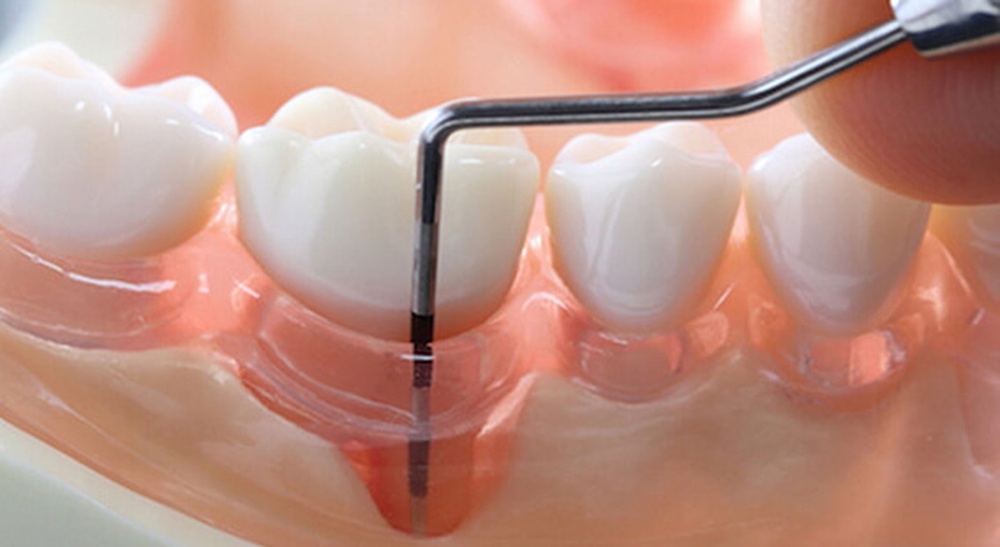
The procedure helps to remove tartar, granulations, soft plaque with the help of specially designed tools.
A pathological gum pocket is a sign of periodontitis and a serious problem that needs to be treated as soon as possible. Until the pocket is closed, the disease will not go away, and cleaning itself contributes to this (closure). Without timely help from a dentist, an abscess may develop, which in the future leads to loosening and loss of teeth.
The effectiveness of the procedure is proven. Curettage is a way to prevent complications in periodontitis and stop the pathological process.
Periodontal tissue is a tissue that can become inflamed if daily hygiene is violated, and therefore there is a risk of developing diseases. If nothing is done, there is a possibility of tooth loss.
There are no contraindications as such. These include inflammatory and acute respiratory diseases. Also, the decision whether to carry out the procedure or not is made individually in the presence of diabetes of the uncompensated type, poor coagulation and blood diseases.
After the procedure, most patients note the following improvements:
In general, if a large periodontal pocket is observed, periodontitis treatment should be carried out without fail and preferably as soon as possible. This allows you to avoid worsening the situation.
When performing closed curettage, no incisions are made in the gums, and their integrity is not violated. The depth of the pockets should exceed 3 mm, that is, the technique is suitable for a mild form of periodontitis. If this procedure is carried out at an advanced stage of the disease, it will only provide a temporary improvement.
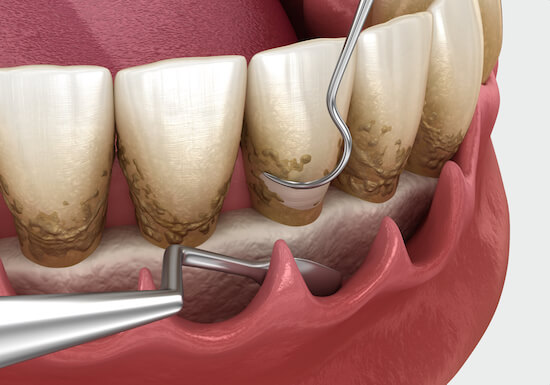
Closed curettage is performed as follows:
here are several methods of closed curettage. They differ in equipment, duration and price. The procedure is always performed under local anesthesia, so it does not cause discomfort.
A metal hook is used. It is inserted under the gums and manual scraping of hard deposits is carried out. They accumulate on the exposed tooth root.
Such curettage of the tooth is performed with the help of special equipment that effectively breaks the stone. Its removal is carried out under pressure using an antiseptic solution. It also allows you to wash out pathogenic microflora from the gingival pockets.
A modern option is laser curettage. It is distinguished by bloodlessness and the absence of the need to apply a bandage. Usually used only after ultrasonic or mechanical.
The duration of the procedure when choosing any of the methods is about 30-60 minutes.
Open curettage of the gums is a necessary procedure. It differs from the closed technique in that it is a full-fledged surgical operation with dissection of the gums.
If an open curettage is performed, part of the gum is peeled away to access the deep deposits. It is carried out for pocket depths of 3-6 mm.
Gum curettage is performed as follows:
Open curettage can be chosen as a method of treatment only as prescribed by a doctor. The specialist analyzes the patient’s condition, takes into account the indicators and makes a choice in favor of a specific method.
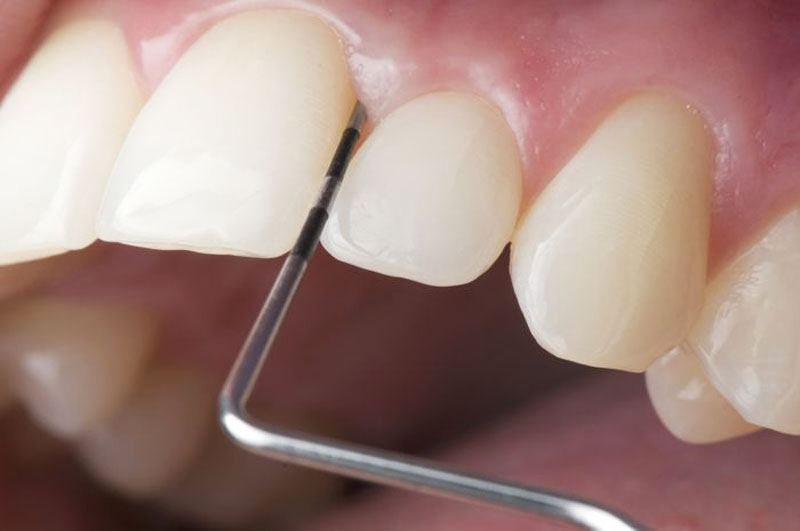
Depending on which type of procedure was chosen, how the pockets between the teeth were cleaned, there may be different sensations, for example, tooth mobility, swelling, increased sensitivity. Usually, all the consequences that can be disturbing occur in 10-14 days with a closed technology of conduction or a little more with an open one. Increased sensitivity may persist for up to 2-3 weeks.
The gum pocket after cleaning will tighten faster and all the consequences will disappear if you follow the following recommendations:
Curettage of periodontal pockets is part of complex treatment for periodontitis and other periodontal tissue diseases. The procedure itself cannot get rid of this disease. The need for the procedure and the choice of technique is considered in each case individually.
Polityka prywatności i plików cookies • Prawa Pacjenta – NOWA Sp. z o.o. • Informacja o zbieraniu danych osobowych • Standardy Ochrony Małoletnich